

Improved Health Outcomes & Diagnostic Research With AI Innovation
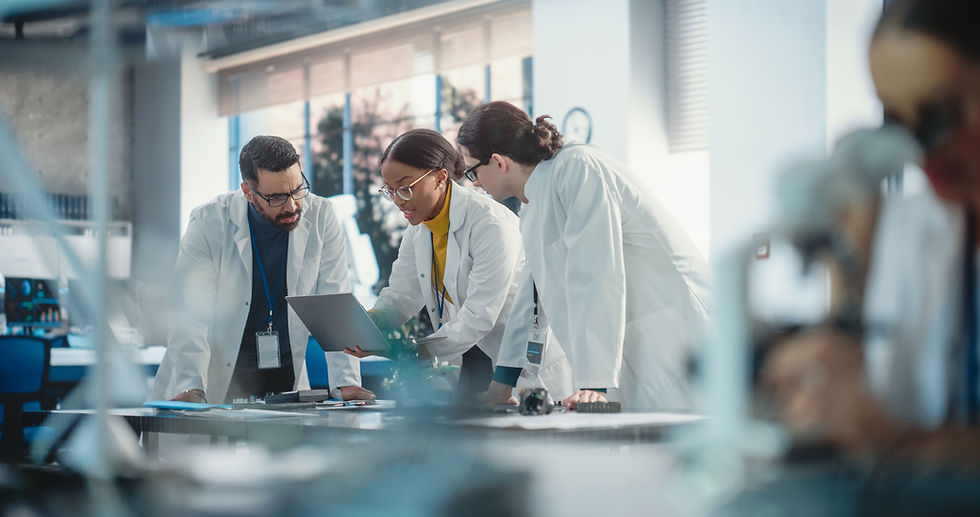
AI has contributed to countless innovative advances in healthcare and other industries around the world. Its rapid evolution over the past several years has led to not only greater efficiencies and productivity, but also improved health outcomes for patients with a variety of conditions.
Now, we are seeing researchers leverage the capabilities of AI with the end goal of improved health outcomes and further advancements in diagnostic research.
The future of patient treatments and the understanding of diseases and conditions that affect us has the potential to be shaped by developments made by AI. Read on to explore some of the latest research conducted by professionals at universities in Illinois and Wisconsin.
Bacteria Detection in Hours Instead of Days
At Southern Illinois University Carbondale, researchers are integrating AI single-cell bacteria detection, which has proven to have excellent results.
With AI-powered data analysis, the process of detection can be sped up from several days to just a few hours. This is game-changing for health diagnoses, as detecting bacteria sooner can allow treatment to begin sooner. AI is introducing advancements that not only make processes more efficient, but that can contribute to patient wellness.
The researchers conducted an example analysis to identify E. Coli cells and results were produced in only two hours. The AI model was able to identify 96% of individual E. Coli cells and did not produce any false-positive predictions on images without bacteria. This test would have normally taken up to five days without AI’s assistance.
This is just the beginning of this development, as the researchers involved in this project have plans to expand these capabilities into further diagnostic advancements.
Advancements in Detecting Signs of Conditions
Diagnosing Neurodegenerative Diseases
Dr. Jeff Nirschl, assistant professor of pathology and laboratory medicine at the University of Wisconsin School of Medicine and Public Health, is leveraging generative AI and machine learning to analyze large datasets from his Alzheimer’s Disease research.
This is done to pinpoint the existence and interaction of diseased cells within their native tissue environment. AI models utilized in this research have the potential to enable healthcare providers to link brain tissue findings to other biomarkers to improve the accuracy of diagnosis.
AI models have proven to be highly beneficial when it comes to early diagnoses, allowing for treatment plans and awareness to begin much sooner.
Diagnosing Ovarian Cancer
Irene Ong, associate professor of biostatistics and medical informatics and obstetrics and gynecology at the University of Wisconsin School of Medicine and Public Health, is also leveraging AI for diagnostic purposes. In this case, AI is contributing to earlier diagnoses of ovarian cancer.
Ong is leveraging AI to develop a decision-support system that healthcare providers can use to make earlier and more accurate diagnoses of this serious disease. Machine learning models are sifting through large amounts of health records to understand the important differences in patients with ovarian cancer compared to control groups with similar symptoms.
The algorithm used has identified certain key factors that can distinguish patients with undetected ovarian cancer from those that do not have said condition. This is a huge advancement when it comes to early detection and treatment of a fatal disease, contributing to a future of healthcare with greatly improved patient outcomes.
The ways in which healthcare professionals and researchers are taking AI’s capabilities to the next level highlight a strong future in health innovations.
These capabilities are huge indicators of what the future of diagnostic research can look like, and how more patients can reap the benefits of improved health outcomes and patient experiences.
“There’s a way to do it better–find it.”
– Thomas Edison, Inventor & Businessman
Sources:



Comments